Format: Video

Date palms have significant ties throughout history and recently, have found new worth in the desert landscape of the Southwest.

Arizona State University has taken it upon themselves to preserve hundreds of species of date palms and integrate the plant into campus life. From simple shade on Palm walk to harvesting fruit on Date Night, date palms have proven their use at ASU. The date palm is a perfect example of how preserving nature and ensuring its survival in the arid future will help build a sustainable tomorrow.


The Process of Writing and Using Images

Video

The Process of Writing and Using Images

Video
Share this video

More videos from the Video

4 Oceans

4-OCEANS aims to assess the importance of marine life for human societies during the last…

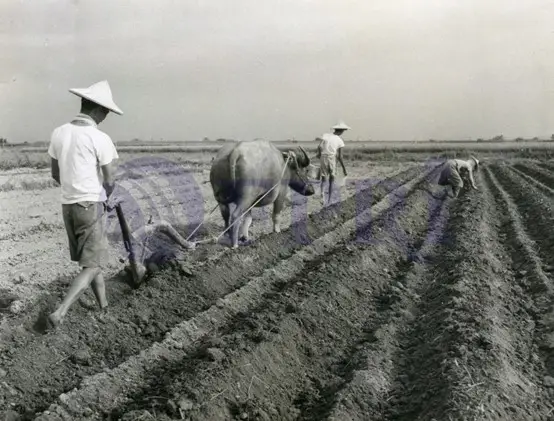
A Historical Sketch of Agricultural Environment in Taiwan: Food Production, Politics, and Farm Life in the Field

Taiwan’s agricultural history reveals how colonial rule, industrialization, and global trade transformed the island’s land,…

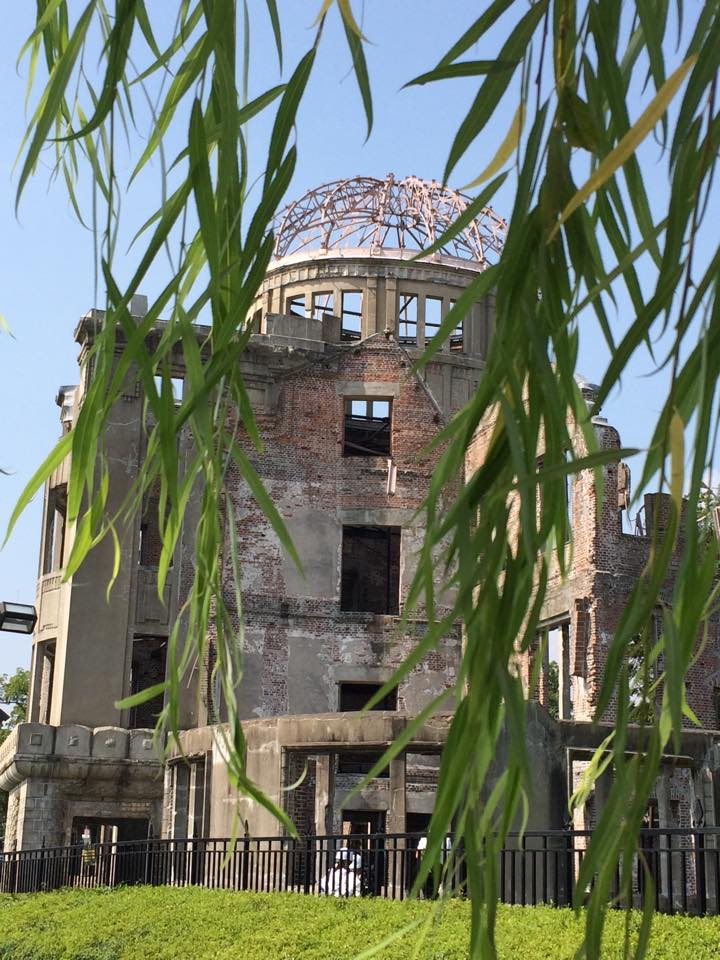
After Hiroshima

This project examines nuclear colonialism and radiation ecologies in the Pacific through Indigenous literary perspectives,…

Archive of Hope and Cautionary Tales

“The Archive of Hope and Caution” is a collection of stories and videos about frontline…

Beyond Bios

Industrial processes are uncoupling life from death, diminishing death’s capacity to channel vitality back to…

Bifrost Online

Bifrost Online is an international, open-access channel promoting education for sustainability and climate change awareness….

Each of the North American Observatory projects and activities seeks to integrate the humanities and arts centrally in linked local, regional, and global collaborations with the expanding network of HfE Observatories around the world.

Date: November 7, 2013

David Quammen, author of Spillover: Animal Infections and the Next Human Pandemic

Dan River Basin

A documentary film by Sam Carver, Charlotte Freytag, Jess Jordan and Cole Brewer, students enrolled in Wake Forest University’s First Year Seminar “Nature, Environment, and Place in American Thought” in Spring 2014.

This video is part of an exhibit created by students enrolled in Professor Lisa Blee’s First Year Seminar “Nature, Environments, and Place in American Thought” at Wake Forest University in Spring 2014. Environmental writers, philosophers, and activists have long shaped the ways Americans conceive of our natural surroundings.

The purpose of this exhibit is to investigate and present the ways humans understand and engage with their environments. In this sense, the exhibit is a part of a larger tradition. People have long struggled to represent the essence of nature and its imprints on humanity; some utilize written prose, while others turn to maps, photographs, art, and landscape design. Through photo essays, place studies, mapping, and multimedia films, students explore this human impulse, while also creating their own representations of nature in a digital format.

Harmony Ridge Farm: Local Sustainability
A documentary film by Christiaan Honig, Patrick McCarthy, Abby Mrvos, and Jin Zhang, students enrolled in Wake Forest University’s First Year Seminar “Nature, Environment, and Place in American Thought” in Spring 2014.

This video is part of an exhibit created by students enrolled in Professor Lisa Blee’s First Year Seminar “Nature, Environments, and Place in American Thought” at Wake Forest University in Spring 2014. Environmental writers, philosophers, and activists have long shaped the ways Americans conceive of our natural surroundings.

The purpose of this exhibit is to investigate and present the ways humans understand and engage with their environments. In this sense, the exhibit is a part of a larger tradition. People have long struggled to represent the essence of nature and its imprints on humanity; some utilize written prose, while others turn to maps, photographs, art, and landscape design. Through photo essays, place studies, mapping, and multimedia films, students explore this human impulse, while also creating their own representations of nature in a digital format.

Natalie Sevin, Owner of Sungold Farm

A documentary film by Austin Bauersmith, Madeline Coffey, Joseph Parish, and Sarah Rudasill, students enrolled in Wake Forest University’s First Year Seminar “Nature, Environment, and Place in American Thought” in Spring 2014.

This video is part of an exhibit created by students enrolled in Professor Lisa Blee’s First Year Seminar “Nature, Environments, and Place in American Thought” at Wake Forest University in Spring 2014. Environmental writers, philosophers, and activists have long shaped the ways Americans conceive of our natural surroundings.

The purpose of this exhibit is to investigate and present the ways humans understand and engage with their environments. In this sense, the exhibit is a part of a larger tradition. People have long struggled to represent the essence of nature and its imprints on humanity; some utilize written prose, while others turn to maps, photographs, art, and landscape design. Through photo essays, place studies, mapping, and multimedia films, students explore this human impulse, while also creating their own representations of nature in a digital format.

Country and the Anthropocene

Stephen Muecke is Professor of Ethnography at the University of New South Wales, Sydney, where he is part of the Environmental Humanities programme. He has written extensively on Indigenous
Australia, especially in the Kimberley, and on the Indian Ocean. Stephen begins his talk on the tourism industry and Broome (0:40) and expands to consider the hyperobjective cosmos (6:20).

Country and the Gift

Deborah Bird Rose discusses her background, what the Anthropocene means to her (0:40) and how we should respond (1:04). She presents her paper exploring the potentials, pitfalls and problematics of cross-cultural working for country (1:46). She begins by considering the difficulties in her analysis (2:36) before tracing the development of the term country (4:21) her experiences of working on Aboriginal land claims (15:54) and how stories are the breath of life (25:30).

A Planet Changing Species

David Christian (D.Phil. Oxford, 1974) is by training a historian of Russia and the Soviet Union, but since the 1980s he has become interested in World History on very large scales. This grand talk begins with David discussing his take on the Anthropocene (0:23) before covering the Anthropocene and big history (3:49), how we are a planet changing species (19:01), why haven’t historians noticed (19:44) explaining the Anthropocene historically(25:24), what drove the Anthropocene (27:34) and the Anthropocene trap (30:20).

Encountering the Anthropocene. The role of the Environmental Humanities and Social Sciences.

Professor Iain McCalman introduces the term ‘The Anthropocene’ and how it is transforming the mission of what the humanities can be. (00:38) He gives an overview of the conference: Day 1: Perspectives (1:05). Day 2: Caring for Country (2:24) and Day 3: Animals, Plants, Food (3:08) and reminds us that the humanities can bring feeling, emotion and passion to environmentalism in our mission to save the world.

The End of the Environment: Apocalypse, the Anthropocene, and the Future

Libby Robin is a Professor of Environmental History at ANU. She explains how Encountering the Anthropocene is a personal response to the Anthropocene and how we must take an interdisciplinary approach to imaging a future for our planet and the creation of the concept of ‘The Environment”. Key points in her talk include: hope for the future (3:24) collaborating for the future (5:19) current state of the Anthropocene (9:28) Aboriginal relation to Land (11:47) market thinking (15:55) Bishop’s Row London N2 (16:30) “The Environment, a History”: Creation of The Environment (20:15) soil conservation (24:40) eugenics (27:30) conclusion (30:00)

Kate Rigby: Narrative, Ethics and Bushfire in the Anthropocene

Kate Rigby is Professor of Environmental Humanities in the School of Languages, Literatures, Cultures and Linguistics at Monash University and a Fellow of the Australian Humanities Academy and of the Alexander von Humboldt Foundation. Kate’s talk intertwines the importance of narrative, ethics and bushfire in the new age of the Anthropocene.

The Anthropocene as a potential new unit of the Geological Time Scale.

Jan Zalasiewicz is Senior Lecturer at Leicester University and Chair of the Anthropocene Working Group of the International Commission on Stratigraphy. In this talk he explains what the Anthropocene means geolocially (1:35) and how it is still being debated. He mentions how the Comte de Buffon talked of man’s impact in the 1780’s (4:30). How the “Great Acceleration” stratigraphically, began 300 years ago (8:30). He then outlines the manmade geological effects and the immense impact they will have. How vulnerable our atmosphere and seas (18:50) and the effects man’s “civilisation” is having upon them (21:20). We’re on the edge of mass extinctions (29:20) and the explosion of invasive species and domesticated animals (30:00) are having dire effects.

Sverker Sörlin is a Swedish historian of ideas, professor in environmental history at the Royal Institute of Technology, and writer. He chats about what the Anthropocene means to him (0:42) before moving into his talk focusing on the role of the humanities in addressing this new epoch. He situates the Environmental Humanities (5:25), talks about the future of the discipline (16:16) and transgresses the key concepts (31:42).

Imagining Earthly Futures

How shall we conduct ourselves in the face of grave danger and uncertainty?
Public event with writer
Rebecca Solnit

Link to video http://commons.clarku.edu/videoarchive/280/

Council Two
AN ALTERED WORLD
Why is it happening, and what does it mean for Earth and for humans?
May 8 & 9, 2014
Wonderwell Mountain Refuge, Springfield, New Hampshire

At the second Council, members heard from Maya Lin (via video) and Susi Moser (in person) on how they tell the story of what climate change means – Maya Lin through art in her ongoing sixth memorial project (What is Missing?) and Susi Moser as a climate scientist in her role as a co-lead author of the coastal chapter of the National Climate Assessment (NCA), which she presented at the White House on May 6, 2104. The Council considered their own stories about climate change and its potential impacts, and asked what the natural world itself offers as counsel at this time.

Interview
What is Missing?
Maya Lin
, artist
April 7, 2014 at Maya Lin Studio

In this interview, Maya Lin speaks about her sixth and last memorial project, What is Missing?, a series of works that raise awareness of the massive species extinction underway around the world. She also “imagines plausible future scenarios that balance human needs with the needs of the natural world”; these concerns will be shared in an upcoming project Greenprint (2015).

Maya Lin is a world-renowned artist and designer, best known for her design of the Vietnam Memorial in Washington DC. Her studio is in New York City.

Council One
A CHANGING CLIMATE
What is the nature and scale of the climate crisis, seen deeply and accurately?
February 4 & 5, 2014
Higgins School of Humanities at Clark University

At this initial Council, members met with Daniel Schrag, Director, Center for the Environment at Harvard University, to discuss what climate science is telling us about the changing climate to date. They met in Council the following day to consider the questions and responses it raised.

Public event
The Anthropocene and its Discontents
Daniel Schrag
, Director, Center for the Environment,
Harvard University
A Presidential Lecture at Clark University
February 4, 2014

In this talk, Professor Dan Schrag offers an overview of the science of our changing climate – what is happening, why, and where it might be headed. A panel of Council members facilitated by Susi Moser comments on the talk; panelists include Gretel Ehrlich, Beth Sawin, and Kathleen Dean Moore.

Daniel P. Schrag is the Sturgis Hooper Professor of Geology at Harvard University, and Professor of Environmental Science and Engineering. He studies climate and climate change over the broadest range of Earth history, especially how information on climate change from the geologic past can lead to better understanding of anthropogenic climate change in the future. Schrag currently serves on President Obama’s Council of Advisors on Science and Technology.

  • About
  • Observatories
  • Resources
  • Food Futures
  • ExhibitsNew