In 1909 a balloonist photographed the Mer de Glace in the Alps from the air, creating a uniquely detailed visual record of the glacier.
The 100-Year Time-Lapse Project
Circumpolar
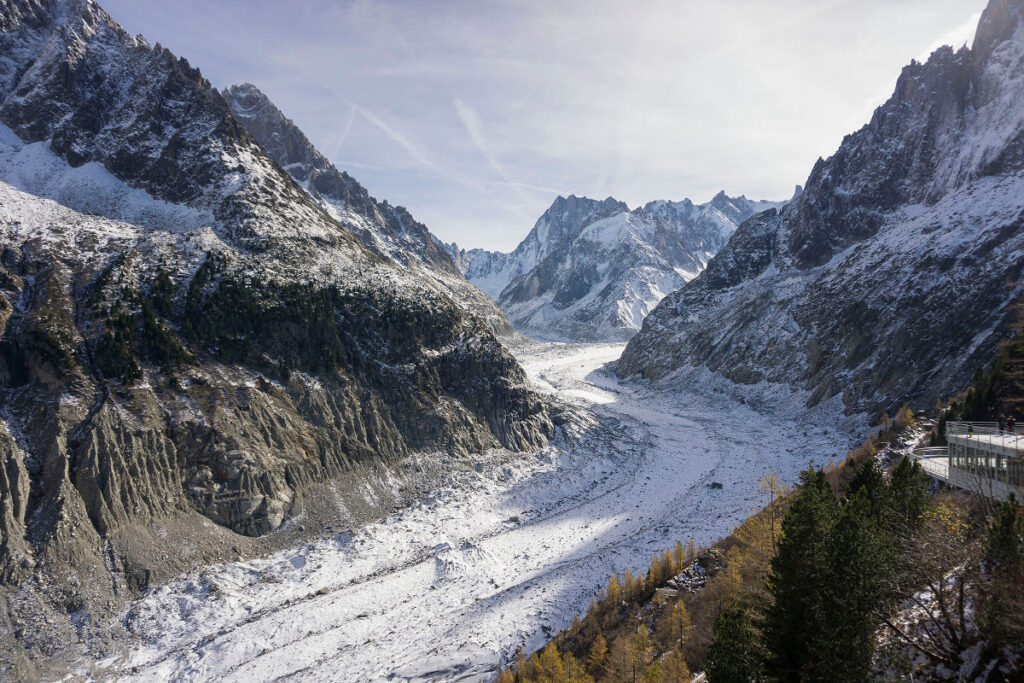
Montenvers railway station overlooks a valley now dominated by bare rock and glacial debris. Photograph by Kieran Baxter.
In 1909 a balloonist photographed the Mer de Glace in the Alps from the air, creating a uniquely detailed visual record of the glacier. A century later, digital methods allow for the photographs taken during Eduard Spelterini’s historical flight to be modelled in three dimensions. In 2017 a team from Scotland returned in a helicopter to the exact location of the original photographs in order to record the visual impact of glacial recession during the twentieth century.
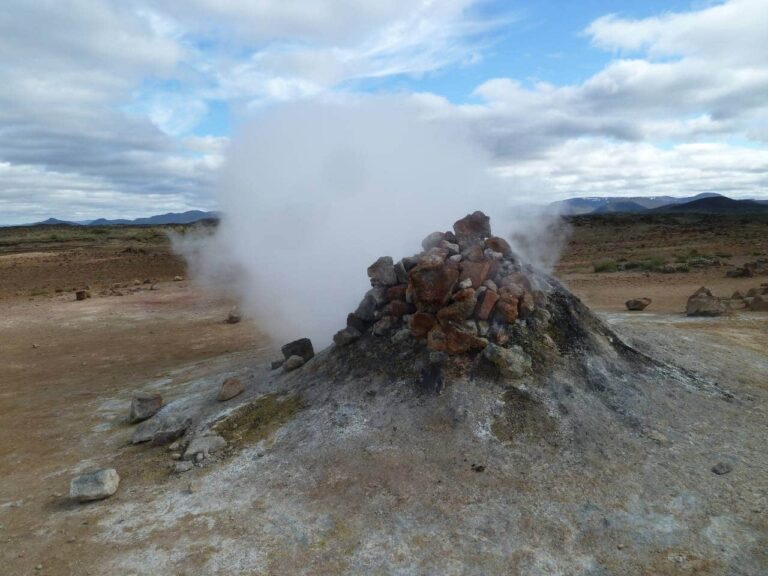
The results visualize not only the physical evidence of our changing climate, but also the changing aesthetic of the alpine landscape. This pilot project demonstrates the viability of novel approaches to visualization for telling the stories of glacial landscapes in a visually compelling way. These methods have also been trialed in Iceland with a view to extending the focus of the project across the circumpolar north.
Link to The 100-Year Time-Lapse Project feature on Bifrost Online:
From Sea to Sky: Archipelagic Thinking, Desert/Island Poetics, and Island Systems
From Sea to Sky is a Spring 2026 hybrid panel series that uses archipelagic thinking to place island and desert studies in dialogue, examining how seemingly discrete landscapes are bound by shared histories, ecologies, and imaginaries.
Project
Create the Change
Create the Change (CTC), supported by a President’s Special Initiative grant, addresses the moral, cultural, political, and economic complexities that hinder progress toward planetary health—challenges that cannot be solved by technology alone. The program mobilizes the social sciences and humanities in partnership with sustainability sciences to confront issues such as disinformation, social and environmental injustice, power imbalances, and cultural barriers.