Observatory: Oceania

UH Environmental Humanities Initiative

Oceania

The Environmental Humanities Initiative at the University of Hawai‘i at Mānoa will introduce students to historical and contemporary understandings of the environment by drawing on and bridging disciplines in the Colleges of the Arts and Humanities (A&H), Languages, Linguistics and Literatures (LLL), Natural Sciences (NS) and Social Sciences (SoSc).

Taking a broad view of the meaning of “environment” (to include human and non-human beings, natural and built environments, and the relations and interactions among them), this interdisciplinary program will prepare students for the study of environmental cultures and related professional paths (government, policy work, NGOs, environmental and arts organizations, environmental journalism, etc.) 

Project Lead

Share this project

More projects from the Oceania

4 Oceans

4-OCEANS aims to assess the importance of marine life for human societies during the last…

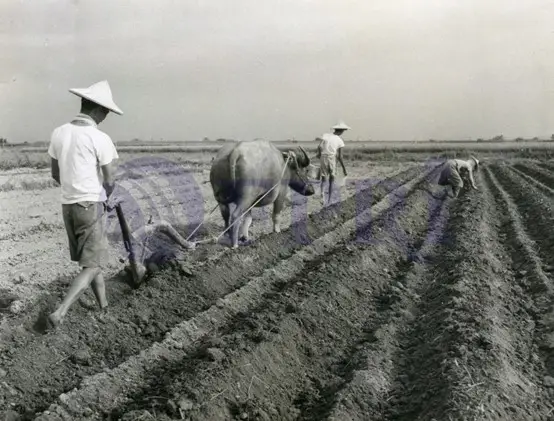
A Historical Sketch of Agricultural Environment in Taiwan: Food Production, Politics, and Farm Life in the Field

Taiwan’s agricultural history reveals how colonial rule, industrialization, and global trade transformed the island’s land,…

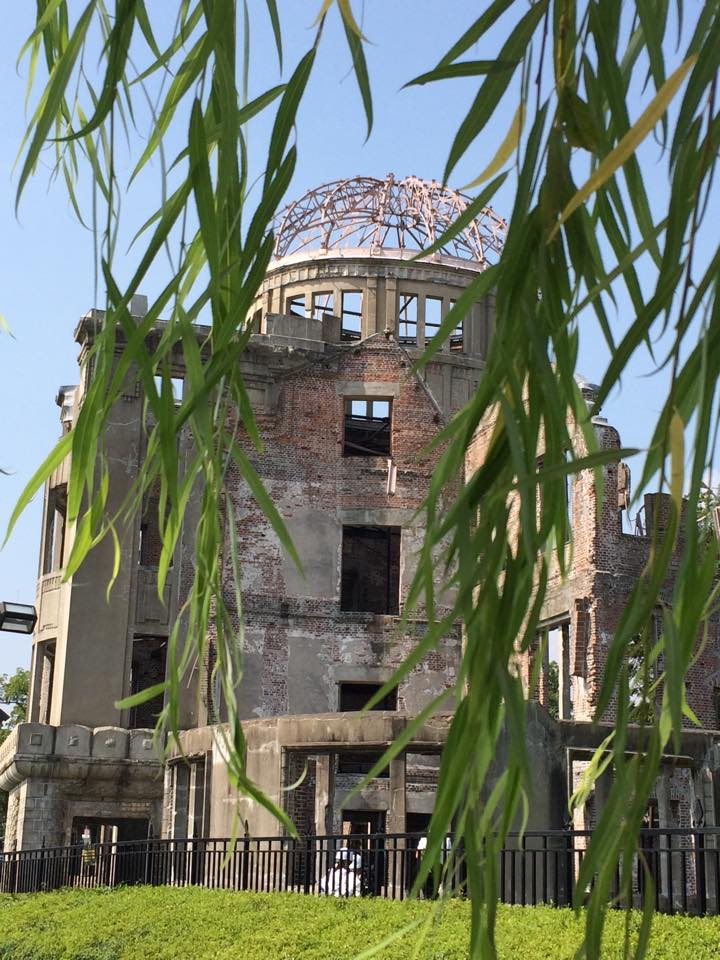
After Hiroshima

This project examines nuclear colonialism and radiation ecologies in the Pacific through Indigenous literary perspectives,…

Archive of Hope and Cautionary Tales

“The Archive of Hope and Caution” is a collection of stories and videos about frontline…

Beyond Bios

Industrial processes are uncoupling life from death, diminishing death’s capacity to channel vitality back to…

Bifrost Online

Bifrost Online is an international, open-access channel promoting education for sustainability and climate change awareness….

Pacific Islander Eco-Literature 

Oceania

For the past ten years, work in this area has sought to foster and develop Pacific Islander Eco-Literature.

This includes developing courses and curriculum at the undergraduate and graduate level on Pacific “eco-poetics”; the curation of symposia, conferences, and reading focusing on the environmental humanities; the editing and publishing of an anthology, Indigenous Pacific Islander Eco-Literatures (2022); and the creation of numerous community engaged, youth, and public environmental humanities events. 

Project Lead

Share this project

More projects from the Oceania

4 Oceans

4-OCEANS aims to assess the importance of marine life for human societies during the last…

A Historical Sketch of Agricultural Environment in Taiwan: Food Production, Politics, and Farm Life in the Field

Taiwan’s agricultural history reveals how colonial rule, industrialization, and global trade transformed the island’s land,…

After Hiroshima

This project examines nuclear colonialism and radiation ecologies in the Pacific through Indigenous literary perspectives,…

Archive of Hope and Cautionary Tales

“The Archive of Hope and Caution” is a collection of stories and videos about frontline…

Beyond Bios

Industrial processes are uncoupling life from death, diminishing death’s capacity to channel vitality back to…

Bifrost Online

Bifrost Online is an international, open-access channel promoting education for sustainability and climate change awareness….

The Living Archive: Extinction Stories from Oceania

Oceania

This project is creating a multimedia space that provides a platform for people to tell their own stories, in their own ways, about what extinction means and how it matters in their lives and places.

The Living Archive is grounded in the understanding that personal narratives have the potential to explore local complexity in ways that are relatable and meaningful, and that generate engagement, connection and attentiveness in this time of great loss.

For further information see the website:
https://www.extinctionstories.org/

Project Lead

Share this project

More projects from the Oceania

4 Oceans

4-OCEANS aims to assess the importance of marine life for human societies during the last…

A Historical Sketch of Agricultural Environment in Taiwan: Food Production, Politics, and Farm Life in the Field

Taiwan’s agricultural history reveals how colonial rule, industrialization, and global trade transformed the island’s land,…

After Hiroshima

This project examines nuclear colonialism and radiation ecologies in the Pacific through Indigenous literary perspectives,…

Archive of Hope and Cautionary Tales

“The Archive of Hope and Caution” is a collection of stories and videos about frontline…

Beyond Bios

Industrial processes are uncoupling life from death, diminishing death’s capacity to channel vitality back to…

Bifrost Online

Bifrost Online is an international, open-access channel promoting education for sustainability and climate change awareness….

Narrative Ecologies of Warragamba Dam

Oceania

This interdisciplinary environmental humanities project focuses on the proposed raising of the Warragamba Dam wall in the lower Blue Mountains in NSW, Australia.

This interdisciplinary environmental humanities project focuses on the proposed raising of the Warragamba Dam wall in the lower Blue Mountains in NSW, Australia. It explores the role of narrative in analysing and responding to socio-environmental controversies. The project aims to develop new resources for enhancing community understanding and involvement in these complex issues, utilising narrative to enable responses that are creative, inclusive, and just. 

For further information see the website:
www.narrativeecologies.org

Project Lead

Share this project

More projects from the Oceania

4 Oceans

4-OCEANS aims to assess the importance of marine life for human societies during the last…

A Historical Sketch of Agricultural Environment in Taiwan: Food Production, Politics, and Farm Life in the Field

Taiwan’s agricultural history reveals how colonial rule, industrialization, and global trade transformed the island’s land,…

After Hiroshima

This project examines nuclear colonialism and radiation ecologies in the Pacific through Indigenous literary perspectives,…

Archive of Hope and Cautionary Tales

“The Archive of Hope and Caution” is a collection of stories and videos about frontline…

Beyond Bios

Industrial processes are uncoupling life from death, diminishing death’s capacity to channel vitality back to…

Bifrost Online

Bifrost Online is an international, open-access channel promoting education for sustainability and climate change awareness….

Multispecies Justice

Oceania

What are the possibilities for multispecies justice? How do social justice struggles intersect with the lives of animals, plants, and other creatures?

In this project, leading thinkers in anthropology, geography, philosophy, speculative fiction, poetry, and contemporary art address these questions from diverse grounded locations. Engaging with ideas about environmental justice, restorative justice, and other species of justice, they hold open the possibility of flourishing in multispecies worlds, present and to come.

For further information see the website:
https://multispeciesjustice.space/

Project Lead

Share this project

More projects from the Oceania

4 Oceans

4-OCEANS aims to assess the importance of marine life for human societies during the last…

A Historical Sketch of Agricultural Environment in Taiwan: Food Production, Politics, and Farm Life in the Field

Taiwan’s agricultural history reveals how colonial rule, industrialization, and global trade transformed the island’s land,…

After Hiroshima

This project examines nuclear colonialism and radiation ecologies in the Pacific through Indigenous literary perspectives,…

Archive of Hope and Cautionary Tales

“The Archive of Hope and Caution” is a collection of stories and videos about frontline…

Beyond Bios

Industrial processes are uncoupling life from death, diminishing death’s capacity to channel vitality back to…

Bifrost Online

Bifrost Online is an international, open-access channel promoting education for sustainability and climate change awareness….

Kangaroo-Human Relations

Oceania

This project aims to uncover the diverse perceptions, knowledges and practices shaping kangaroo-human relations in Australia, and to produce inter-disciplinary knowledge towards more equitable human-wildlife futures.

Its aims are: To investigate how industry, government, scientific, agriculturalist and animal welfare organisations conceptualise kangaroos as native species and pest, food resource and political symbol; To analyse how knowledge about kangaroos and their relations to humans and ecosystems is produced, communicated, and contested by diverse sectors of Australian society; To develop inter-disciplinary approaches for reconciling economic interests and environmental preservation with the ethical treatment of wildlife.

Project Lead

Share this project

More projects from the Oceania

4 Oceans

4-OCEANS aims to assess the importance of marine life for human societies during the last…

A Historical Sketch of Agricultural Environment in Taiwan: Food Production, Politics, and Farm Life in the Field

Taiwan’s agricultural history reveals how colonial rule, industrialization, and global trade transformed the island’s land,…

After Hiroshima

This project examines nuclear colonialism and radiation ecologies in the Pacific through Indigenous literary perspectives,…

Archive of Hope and Cautionary Tales

“The Archive of Hope and Caution” is a collection of stories and videos about frontline…

Beyond Bios

Industrial processes are uncoupling life from death, diminishing death’s capacity to channel vitality back to…

Bifrost Online

Bifrost Online is an international, open-access channel promoting education for sustainability and climate change awareness….

Biocultural Initiative of the Pacific

Oceania

Biology and culture are co-dependent, mutually reinforcing, and inseparably intertwined. Biological and cultural diversity face tremendous threats, and now more than ever we need innovative approaches, new thinking, and concerted efforts to provide appropriate solutions.

Based at the University of Hawai‘i, the Biocultural Initiative of the Pacific is a knowledge centre and network linking scholars, instructors and students who share the common goal of thinking holistically to enhance understanding of biocultural systems.

For further information see the website:
https://manoa.hawaii.edu/biocultural

Project Lead

Share this project

More projects from the Oceania

4 Oceans

4-OCEANS aims to assess the importance of marine life for human societies during the last…

A Historical Sketch of Agricultural Environment in Taiwan: Food Production, Politics, and Farm Life in the Field

Taiwan’s agricultural history reveals how colonial rule, industrialization, and global trade transformed the island’s land,…

After Hiroshima

This project examines nuclear colonialism and radiation ecologies in the Pacific through Indigenous literary perspectives,…

Archive of Hope and Cautionary Tales

“The Archive of Hope and Caution” is a collection of stories and videos about frontline…

Beyond Bios

Industrial processes are uncoupling life from death, diminishing death’s capacity to channel vitality back to…

Bifrost Online

Bifrost Online is an international, open-access channel promoting education for sustainability and climate change awareness….

Beyond Bios

Oceania

Industrial processes are uncoupling life from death, diminishing death’s capacity to channel vitality back to the living. Colonial-capitalist logics continue to naturalize the exploitation of natural resources for human ends and the subjection of humans to racialized hierarchies of worth.

Posthumanist currents, such as the environmental humanities and new materialisms, foreground the entanglements of humans with plants, animals, microbes, and fungi, whose meaningful lives and deaths are thoroughly, if unevenly, intertwined with our social worlds. They also centre the agentic thrust and processual nature of matter in the co-production of meaning and experience. In doing so, these currents reframe other-than-human entities as matters of concern and care in an epoch of eco-social unraveling. But what happens when we think beyond the categories and boundaries of dominant scientific frameworks, including biology and species? What do alternative epistemologies reveal about the substance, scope, and spectrum of life and non-life? Alongside matter, what role do immaterial or non-secular beings play in the (un)making of politics, justice, and worlds? What, in sum, might it mean to imagine and engage with the world beyond bios? Centred around the themes of eco-materialities, techno-materialities, cosmo-materialities, and material afterlives, this collaborative project aims to interrogate, challenge, and circumvent dominant scientific taxonomic frameworks of species and rethink political forms and processes through a more-than-bios lens. In doing so, the project fosters decolonial and coalitional thinking to answer collectively the question: what is life?

For further information see the website:
https://sophiechao.wixsite.com/beyond-bios/ 

Project Lead

Share this project

More projects from the Oceania

4 Oceans

4-OCEANS aims to assess the importance of marine life for human societies during the last…

A Historical Sketch of Agricultural Environment in Taiwan: Food Production, Politics, and Farm Life in the Field

Taiwan’s agricultural history reveals how colonial rule, industrialization, and global trade transformed the island’s land,…

After Hiroshima

This project examines nuclear colonialism and radiation ecologies in the Pacific through Indigenous literary perspectives,…

Archive of Hope and Cautionary Tales

“The Archive of Hope and Caution” is a collection of stories and videos about frontline…

Beyond Bios

Industrial processes are uncoupling life from death, diminishing death’s capacity to channel vitality back to…

Bifrost Online

Bifrost Online is an international, open-access channel promoting education for sustainability and climate change awareness….

Christina Gerhardt is Associate Professor and founder of the Environmental Humanities Initiative, University of Hawai‘i; and permanent Senior Fellow at the University of California at Berkeley, where she taught previously. She is former Senior Fellow at the Rachel Carson Center, Ludwig Maximilian University and former Barron Professor of Environmental Humanities, High Meadows Environment Institute, Princeton University. She is the author of Sea Change: Atlas of Islands in a Rising Ocean (University of California Press, 2023), Editor-in-Chief of ISLE: Interdisciplinary Studies in Literature and the Environment, the quarterly journal of the Association for the Study of Literature and the Environment, published by Oxford UP, and serves on the Editorial Boards of the Journal of Environmental Media and Media and the Environment. She has been awarded fellowships by the Fulbright Commission, National Endowment for the Humanities and Newberry Library and held visiting appointments at Harvard University, Free University Berlin and Columbia University.


For further information: https://manoa.hawaii.edu/llea/german/faculty/christina-gerhardt/

Krista Hiser is Professor of Composition & Rhetoric at Kapi‘olani Community College. She has served as Director of the University of Hawaiʻi System Center for Sustainability Across the Curriculum, and as Senior Fellow for Community Colleges at Global Council for Science and the Environment. Currently, she is on professional leave, serving as Senior Advisor for Sustainability Education at Global Council for Science and the Environment based in Washington, D.C.. She is also host of the Ultimate Cli Fi Book Club through the Association for the Advancement of Sustainability in Higher Education. She received her doctoral degree in Educational Administration from the University of Hawai‘i at Mānoa, focusing on sustainability curriculum. Her master’s degree is in English Composition and Rhetoric from San Francisco State University and her bachelor’s is in English from the University of Iowa.

For further information: https://www.linkedin.com/in/krista-hiser-00885747/

Peter Minter is a poet, editor and writer on poetry and poetics. His poetry is widely published in Australia and internationally, and he is the author of numerous award winning and translated books of poetry such as Empty Texas, blue grass and In the Serious Light of Nothing. He was a founding editor of Cordite Poetry Review, poetry editor for leading Australian journals Meanjin and Overland, and has co-edited anthologies such as Calyx: 30 Contemporary Australian Poets and the Macquarie PEN Anthology of Aboriginal Literature. His research profile is in transcultural ecopoetics, with emphases in Aboriginal and First Nations, Asian and Pacific literatures and arts, and their interdisciplinary interpolations of western experimentalisms. Of Koori and Celtic ancestry, he teaches at the University of Sydney as a senior specialist in Indigenous Studies, Australian Literature, Creative Writing and Ecological Poetics.

Sophie Chao is Discovery Early Career Researcher Award Fellow and Lecturer in the Discipline of Anthropology at the University of Sydney. Her research investigates the intersections of Indigeneity, ecology, capitalism, health, and justice in the Pacific. Chao is author of In the Shadow of the Palms: More-Than-Human Becomings in West Papua and co-editor of The Promise of Multispecies Justice. She is also co-editor of engaged outputs including the volumes Conflict or Consent? The Oil Palm Sector at a Crossroads and Oil Palm Expansion in Southeast Asia: Trends and Implications for Local Communities and Indigenous Peoples, and Diverse Paths to Justice: Legal Pluralism and the Rights of Indigenous Peoples in Southeast Asia. Sophie previously worked for the human rights organization Forest Peoples Programme in Indonesia, supporting the rights of forest-dwelling Indigenous peoples to their lands, resources, and livelihoods. She is of Sino-French heritage and lives on unceded Gadigal lands in Australia.

Website: www.morethanhumanworlds.com

Stephen Muecke is a senior academic in the humanities and creative arts, and a Fellow of the Australian Academy of the Humanities. He has extensive expertise in Indigenous Studies, Creative Writing, Cultural Theory, Literary Studies and the Environmental Humanities. He has been the recipient of numerous Australian Research Council grants, including a five-year Professorial fellowship, and served on the ARC College of Experts. He was the first Professor of Cultural Studies in Australia, in 1993, and a Fulbright Scholar and a visiting professor at the Freie Universität, Berlin and at the Université de Paris XIII. He is the author, translator or editor of 30 books and numerous articles and pieces of creative work. An Emeritus Professor at UNSW, he is also an Adjunct Professor at the University of Notre Dame, Broome, where much of his research is undertaken.

Tess Lea is an anthropologist who specialises in the ethnography of settler colonial policy and bureaucratic cultures. Her research queries the assumption that the liberal democratic state works but for aberrant examples where it is misaligned with what is truly needed. This matters for environmental advocates and researchers, who can share a faith in the rationalities of policy and thus avoid the hard work of yielding the underpinnings of their/our/my extractivist good life, as is necessary for multiple lives to flourish. Lea’s latest book, Wild Policy: Indigeneity and the Unruly Logics of Intervention (2020, Stanford UP) expands some of these concepts. She is Dean of Social Sciences at Macquarie University and respectfully acknowledges that the Macquarie campus is on the unceded territories of the Wallumattagal clan of the Dharug Nation.

Craig Santos Perez is an indigenous Chamoru from Guam. He holds an MFA in Creative writing from the University of San Francisco and a Ph.D. in Ethnic Studies from the University of California, Berkeley. He is the author of six books of poetry and the academic monograph Navigating Chamoru Poetry: Indigeneity, Aesthetics, and Decolonization (2022). He is also the co-editor of seven anthologies, including Indigenous Literatures from Micronesia (2019) and Indigenous Pacific Islander Eco-Literatures (2022). He is a professor in the English department and affiliate faculty with the Center for Pacific Islands Studies and the Indigenous Politics program at the University of Hawaiʻi at Mānoa.

For further information: www.craigsantosperez.com

Alexander Mawyer is Director of the Center for Pacific Islands Studies and Acting Chair of the Department of Pacific Islands Studies at the University of Hawai’i at Mānoa. Mawyer holds a BA from Amherst College, MAs from UHM and the University of Chicago, and a doctorate in Anthropology from the University of Chicago. Mawyer’s recent research interests include language and space in Oceanic linguistics, biocultural indicators, conservation and sovereignty, and marine resource governance in the Pacific. He served as editor for The Contemporary Pacific: A Journal of Island Affairs from 2016 to 2021. He sits on the Board of the University of Hawai’i Press (UHP) and is a member of the scientific committee of the Maison des sciences de l’Homme du Pacifique and The Rāhui Center in Polynésie Française.

For further information: https://hawaii.edu/cpis/people/core-faculty/alexander-mawyer/

Ann Elias is Professor of Art and Visual Culture at the University of Sydney. Her research on oceans concentrates on the undersea with a particular focus on visual history, and visual representations of the underwater. She is very interested in underwater photography, underwater dioramas, and aquarium culture. She is currently working on a book-length project investigating the underwater history of Sydney Harbour. Elias has published three monographs, including Coral Empire: Underwater oceans, colonial tropics, visual modernity (Duke University Press, 2019), a visual history of early filmmaking and photography at the Great Barrier Reef of Australia including the intersections of visual culture with social and environmental histories.

Blanche Verlie is a multidisciplinary social scientist whose research investigates how people understand, experience, and respond to climate change, and how we might do this differently and better. She is a Lecturer in the School of Humanities and Social Inquiry at the University of Wollongong, Australia. Verlie draws on feminist and multispecies philosophy to consider the complex, diverse and intimate ways that climate changes manifests in contemporary life, and how this analysis could inform more just and ecological modes of living in, with, and as the world. Her work focuses specifically on the ways climate change is felt, lived and imagined, such as the often visceral experiences of climate distress, and the unequal and unjust dimensions of this, as well as how this affective injustice can inspire regenerative forms of climate action. This work spans the areas and disciplines of climate change education, communication and activism, community disaster resilience and adaptation, as well as environmental politics, cultural geography, and environmental humanities. She is the author of Learning to Live with Climate Change: From Anxiety to Transformation (Routledge, 2021).

For further information: https://scholars.uow.edu.au/blanche-verlie

Candace Fujikane is an English professor at the University of Hawaiʻi. She has co-edited with Jonathan Okamura Whose Vision? Asian Settler Colonialism in Hawaiʻi, a special issue of Amerasia Journal (2000), which was expanded to Asian Settler Colonialism: From Local Governance to the Habits of Everyday Life in Hawaiʻi (University of Hawaiʻi Press, 2008). She has also published work on Haunani-Kay Trask’s elemental poetry, on decolonial and abolitionist futures at Mauna a Wākea, and on Kanaloa and sea level rise. Her book, Mapping Abundance for a Planetary Future: Kanaka Maoli and Critical Settler Cartographies in Hawaiʻi, was released in 2021 (Duke University Press). She is currently working on her new book, Elemental Cartographies for a Changing Earth. She has stood for lands and waters in Hawaiʻi for over twenty years.

For further information: https://hawaii.academia.edu/CandaceFujikane

Christine Winter (Ngati Kahungunu, Pākehā) is a Senior Lecturer in Politics Tōrakapū at the University of Otago Te Whare Whānanga o Ōtākou and Research Affiliate at the Sydney Environment Institute. A political theorist, Christine’s research engages with decolonial framings for the political theories of multispecies, environmental, climate and planetary justice, and planetary boundaries. At the heart of her work is an examination of the incompatibilities between western and Māori philosophies and ways in which theories of justice continue the colonial project, as demonstrated in her recent book The Subjects of Intergenerational Justice: Indigenous philosophy, the environment, and relationships (Routledge, 2022). She is interested in creating a space for political theory to actively contribute to the decolonial project required for manifesting political justice in Aotearoa. Her approach is to interrogate epistemological and ontological assumptions that ground theory and shape politics, legislation, and law. In doing so she has two aims: to identify what is required if justice theory is to be just for Māori (and where/if applicable Indigenous Peoples of the settler states); and to expand the boundaries of theories of justice to protect the environment (as most broadly conceived) for future generations of Māori, settler compatriots and the multispecies community.

For further information: https://www.otago.ac.nz/politics/staff/otago841789.html

Dalia Nassar is Associate Professor of Philosophy at the University of Sydney. Her works sits at the interface between the history of philosophy, environmental philosophy, ethics, and aesthetics. She has published two books, including, mostly recently, Romantic Empiricism: Nature, Art, and Ecology for Herder to Humboldt (OUP 2022), which offers a revised understanding of early nineteenth-century philosophy, and demonstrates both its environmental legacy and continued significance. With plant physiologist Margaret Barbour, she has written on the ‘embodied history of trees,’ and is currently working on two new projects, one on soil and the other on the nineteenth-century German Naturphilosoph, Friedrich Schelling. With Millicent Churcher and Yarran Hominh, she is editing the 2024 issue of the Australian Philosophical Review on responsibility to the more-than-human world.

For further information: https://www.sydney.edu.au/arts/about/our-people/academic-staff/dalia-nassar.html

Danielle Celermajer is Professor of Sociology at the University of Sydney, Deputy Director of the Sydney Environment Institute and leads the Multispecies Justice project. With a background in human rights advocacy and scholarship, her current research focuses on reconceptualizing justice for all earth beings, climate change imaginaries, and institutional transformation in the context of the polycrisis. Her books include Sins of the Nation and the Ritual of Apology and The Prevention of Torture, A Cultural History of Law in the Modern Age, The Subject of Human Rights, and Institutional Transformations. Through the experience of living through the black summer bushfires with a multispecies community, she began writing about a new crime of our age, Omnicide. Her latest book, Summertime (Penguin Random House, 2021) was shortlisted for the Victorian Premier’s Literary Awards for non-fiction.

Jaimey Hamilton Faris is Associate Professor of Contemporary Art and Critical Theory at the University of Hawai`i, Mānoa, where she is also affiliate faculty in the Center for Pacific Islands Studies and the Institute for Sustainability and Resilience. Her writing and public humanities projects advocate for (re)new(ed) creativities and ecologies across the Asia Pacific region and beyond. A series of articles and essays about feminist environmental performance in Oceania can be found in Pacific Arts Journal, Shima, Oceans Rising (Sternberg Press), and Feminist Review. She’s organized arts and regenerative cultures programs across Ka Pae `Āina O Hawai`i Nei, including Inundation: Art and Climate Change in the Pacific. Currently, she’s working on Liquid Futures: Water, Art and Feminism, about care-based community art practices that support climate and water justice.

For further information: https://www.jaimeyhamiltonfaris.com/

James Dunk is a historian and interdisciplinary researcher based in the School of Social and Political Sciences at the University of Sydney interested in mental health, planetary health, and ecological emotion. His current research places the experience of eco-anxiety in historical context, mapping climate distress and other strong emotions against the contours of family, community, and ecological life. James’s books and articles explore settler psychology, the social and political dimensions of colonial mental health, and efforts to reconfigure ideas about human health and psychology in the Anthropocene. His articles, essays and reviews appear in historical journals, medical and psychological journals and literary journals. James is committed to public storytelling, and has helped curate a range of events which have worked the boundaries between academic knowledge and lived experience, weaving written and spoken words together with music, film, photography, and other kinds of art.

For further information: https://jamesdunk.com

Jennifer Deger is co-director of the Centre for Creative Futures and Professor of Digital Humanities at Charles Darwin University. Her work moves through the intertidal zones of anthropology, art and environmental humanities. It finds form in film, digital media, experimental ethnographic writing, and curation. For the past 25 years Jennifer has worked on co-creative media projects under Yolŋu leadership, collaborations that continue to inform and energize her commitments to social research and its potentially transformative reach.

Jennifer is a co-editor and co-curator of Feral Atlas: the More-than-human Anthropocene, published online by Stanford University Press and exhibited at the Istanbul Biennale and Sharjah Architecture Triennial in 2019. She is a co-founder of Miyarrka Media, an award-winning arts and research collective based in northeast Arnhem Land; and co-instigator of curatorium collective, an intergenerational group of anthropologists attempting to compose anthropology otherwise.

For further information: https://www.cdu.edu.au/staff/jennifer-deger

Emily O’Gorman is an Australian Research Council Future Fellow and Associate Professor at
Macquarie University, Sydney. Her research is situated within environmental history and the
interdisciplinary environmental humanities, and is primarily concerned with contested knowledges within broader cultural framings of authority, expertise, and landscapes. This has been supported by nationally competitive research grants as well as a Carson Writing Fellowship at the Rachel Carson Center, LMU, Munich. She is the author of Flood Country: An Environmental History of the Murray-Darling Basin (2012) and Wetlands in a Dry Land: More-than-human Histories of Australia’s Murray-Darling Basin (University of Washington Press, 2021: Nautilus Book Awards Silver Winner in Ecology & Environment 2022). She co-leads the Environmental Humanities research group at Macquarie University, was a founding Associate Editor of the journal Environmental Humanities (2012-2014) and a founding co-editor of the Living Lexicon in that journal (2014-2020). She is currently the Convenor of the Australian and Aotearoa New Zealand Environmental History Network.

For further information: http://www.emilyogorman.net

Jenny Newell is Curator for Climate Change in the Climate Solutions Centre at the Australian Museum, Sydney. She works to advance understanding and engagement in climate solutions through the medium of museums. Her most recent exhibitions are Spark: Australian innovations tackling climate change (2021) and Future Now (2022-), a diorama-based exhibition about sustainability, touring community venues. With a background in Pacific environmental history, Jenny has worked with Pacific communities and collections at the British Museum, National Museum of Australia, the American Museum of Natural History and the Australian Museum to amplify voices on climate change for broad audiences. Jenny convenes the international Museums & Climate Change Network and local Sydney Climate Institutions for Climate Action. Her publications include Trading Nature (2010) and edited volumes Curating the Future: Museums, Communities and Climate Change (2016) and Living with the Anthropocene (2020).

Kirsten Wehner is the James O Fairfax Senior Fellow in Culture and Environment at the National Museum of Australia. An established curator, artist, creative producer and writer, Kirsten’s practice centres on the cultural/emotional dimensions of ecological crisis, with a focus on how materials and spaces may help transform people’s relationships with/in the more-than-human world. Kirsten was formerly Director of PhotoAccess, the ACT’s centre for photography, image and media arts, and Head Curator, People and the Environment, at the National Museum. She has held research and artist residencies at the Rachel Carson Centre, Munich, University of Sydney and University of Canberra/Belconnen Arts Centre. Kirsten has published widely on affective museum practice and object meanings, engaging themes across a wide sweep of Australian experience. Her most recent book is the co-edited/authored Living with the Anthropocene: Love, loss and hope in the face of environmental crisis (New South Books, 2020).
For further information: https://www.nma.gov.au/explore/research/james-o-fairfax-senior-fellow-culture-environment

Thom van Dooren is a field philosopher and writer. He is Deputy Director of the Sydney Environment Institute at the University of Sydney. His work is situated in the interdisciplinary environmental humanities with particular grounding in cultural studies, philosophy, and science and technology studies. His research and writing focus on the diverse ethical, cultural, and philosophical issues that arise in the context of species extinctions and human entanglements with threatened species and places. He has explored these themes in depth in three books: A World in a Shell: Snail Stories for a Time of Extinctions (MIT 2022), The Wake of Crows: Living and Dying in Shared Worlds (Columbia UP 2019), and Flight Ways: Life and Loss at the Edge of Extinction (Columbia UP 2014). With Deborah Bird Rose, he was founding editor of the journal Environmental Humanities (Duke University Press). He has held advisory and visiting positions at key environmental humanities institutes around the world, including a Humboldt Fellowship for Experienced Researchers at the Rachel Carson Centre, Ludwig Maximilian University of Munich (2014-16), and a Professor II appointment at the Oslo School of Environmental Humanities at the University of Oslo (2020-2022). His research has been funded by a range of other grants and fellowships, including an Australian Research Council Future Fellowship (2017-2021), and several ARC Discovery Projects.

For further information: http://www.thomvandooren.org

David Schlosberg is Co-Director of the Sydney Environment Institute and Professor of Environmental Politics in the Department of Government and International Relations at the University of Sydney, and is known internationally for his work in environmental politics, environmental movements, and political theory – in particular the intersection of the three with his work on environmental justice. Most recently, he has co-authored Climate-Challenged Society (Oxford 2013) with John Dryzek of ANU and Richard Norgaard of UC Berkeley; the same team edited The Oxford Handbook of Climate Change and Society (Oxford 2011). Professor Schlosberg has held visiting appointments at the London School of Economics, Australian National University, and Princeton University. His current research includes work on climate justice – in particular justice in adaptation strategies and policies, and the question of human obligations of justice to the nonhuman realm. He is also examining the sustainable practices of new environmental movement groups – in particular their attention to flows of power and goods in relation to food, energy, housing, transportation, and crafting and making.

Informing my recent research in the Environmental Humanities is my strong interest in ecocriticism, ecophilosophy and ecotheology. I am senior co-editor, with Freya Mathews, of the ecological humanities journal, PAN (Philosophy Activism Nature) and I was the founding President of the Association for the Study of Literature, Environment and Culture-Australia-New Zealand (http://www.aslec-anz.asn.au/) between 2004 and 2008. I am also a founding member of the Australian Ecological Humanities research network (http://www.ecologicalhumanities.org/) and the founding director of the Forum on Religion and Ecology@Monash.

Elspeth Probyn FAHA, FASSA is Professor of Gender and Cultural Studies at the University of Sydney. She has published several monographs including Sexing the Self (Routledge, 1993), Outside Belongings (Routledge, 1996), Carnal Appetites (Routledge, 2000), Blush: Faces of Shame (Minnesota, 2006), and Eating the Ocean (Duke, 2016). Her current research focuses on fishing as extraction, fish markets as gendered spaces of labour, and anthropocentric oceanic change. She is the co-editor of Sustaining Seas: Oceanic Space and the Politics of Care (Rowman & Littlefield, 2020). Her current project is called “Extracting the Ocean”: https://extractingtheocean.org/

Jude Philp works at the University of Sydney where she is senior curator of the Macleay Collections at the Chau Chak Wing Museum. Trained in social anthropology by Torres Strait Islanders and Sydney and Cambridge University academics, her work focusses on anthropological understandings of the histories of acquisition for museum collections. In particular she is engaged in making obvious the roles of Indigenous knowledges that were ignored or manipulated during collecting expeditions and segregated into ‘culture’ in museum processes. Her exhibition work principally engages with issues of climate change and social justice through amplifying the voices of marginalised peoples.

For further information: https://www.sydney.edu.au/museum/about-us/our-people/jude-philp.html

  • About
  • Observatories
  • Resources
  • Food Futures
  • ExhibitsNew